

Rotator Cuff Repair in Vadodara

Understanding Rotator Cuff Tears and Shoulder Function

The rotator cuff is a group of four muscles and their tendons that help move the shoulder and keep the upper arm bone stable within its socket. A tear in one of these tendons may develop due to a sudden injury, repetitive overhead movements, or age-related tendon changes. It can cause shoulder pain, weakness, and difficulty lifting or rotating the arm.

Rotator cuff repair in Vadodara may be considered when a tendon tear causes persistent symptoms or affects shoulder function. Dr. Shailin Shah evaluates the size and location of the tear, the quality of the tendon, and the patient’s activity requirements to determine whether non-surgical treatment or surgical repair is appropriate.

Expert Orthopedic Care by Dr. Shailin Shah

FELLOWSHIP IN ARTHROPLASTY (JOINT REPLACEMENT) AND ARTHROSCOPY (KEY HOLE SURGERY)
REVIEWED ON
4.9 RATINGS
REVIEWED ON
4.9 RATINGS

When a Rotator Cuff Tear Needs Further Assessment

Rotator cuff injuries can range from mild tendon damage to complete tears. Some patients improve with physiotherapy and activity modification, while others experience ongoing weakness or pain that requires further evaluation.

An orthopedic assessment helps establish whether the symptoms are caused by a rotator cuff tear or another shoulder condition and whether the tendon may benefit from surgical repair.

Pain When Raising the Arm

Pain during overhead movement or when reaching away from the body may indicate irritation or damage involving the rotator cuff tendons.

Weakness During Shoulder Movement

Difficulty lifting objects, rotating the arm, or performing routine tasks may suggest that a tendon injury is affecting shoulder strength and control.

Persistent Pain at Night

Shoulder discomfort that interferes with sleep or continues despite appropriate non-surgical treatment may warrant further assessment, particularly when accompanied by weakness or reduced movement.


How Rotator Cuff Repair Is Performed

1

ASSESSMENT

Reviewing shoulder movement, strength, symptoms & imaging 

2

SURGICAL ACCESS

Using small incisions & camera for arthroscopic repair 

3

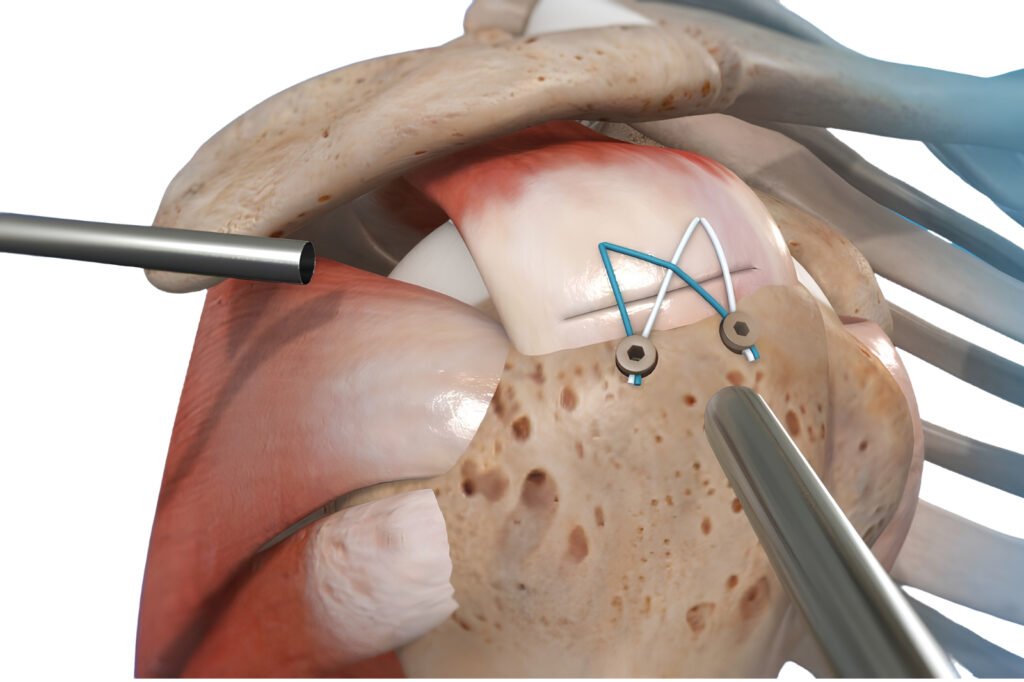
REATTACHMENT

Securing the torn tendon to the upper arm bone by fixation

4

REHABILITATION

Protecting the repair during early healing and progressing

Choosing the Right Rotator Cuff Treatment

Not every rotator cuff tear requires surgery. Treatment depends on whether the tear is partial or complete, how it occurred, the degree of weakness, and how much it affects daily activities.

Non-Surgical Management

For selected tears, treatment may include activity modification, appropriate pain relief, and physiotherapy to improve shoulder movement and strengthen surrounding muscles. This approach may help manage symptoms even when the tendon itself does not fully heal.

Arthroscopic Rotator Cuff Repair

Arthroscopic repair may be recommended for suitable tears that cause persistent pain or weakness, particularly after an acute injury or when conservative treatment has not provided adequate improvement. The torn tendon is reattached to the bone using specialised fixation techniques.

Dr. Shailin Shah
M.S.(ORTHO), DNB (ORTHO), FIJR, FIASM, MNAMS, DIPLOMA IN FIFA

Rotator Cuff Repair Care with Dr. Shailin Shah

Dr. Shailin Shah provides orthopedic evaluation at Rutvij Hospital, Vadodara, for shoulder conditions that affect movement, strength, and daily function. His fellowship training in arthroscopy is relevant to the assessment and surgical management of selected tendon and joint injuries.

The consultation considers when the symptoms began, whether the injury followed a specific event, and which movements have become difficult. Physical examination and imaging help determine the extent of tendon damage and whether the tear is likely to respond to non-surgical treatment or may require repair.

When surgery is being considered, the discussion includes the expected benefits, possible risks, rehabilitation requirements, and the time needed to protect the healing tendon. Treatment recommendations are based on the individual tear and the patient’s functional goals rather than the scan findings alone.

Protect the Repair. Rebuild Shoulder Strength.

Happy Patients

0 +
What to Expect During Recovery

Recovery After Rotator Cuff Repair in Vadodara

Recovery after rotator cuff repair takes time because the tendon needs to heal securely to the bone. A sling is commonly used for a period after surgery, and shoulder movement is introduced according to the size of the tear and the repair performed. During the early phase, patients may need assistance with dressing and other everyday activities.

Physiotherapy progresses in stages, beginning with protected movement and advancing to active motion and strengthening when appropriate. Returning to overhead work, heavy lifting, or sports may take several months and depends on healing, strength, and clinical assessment. Following the rehabilitation plan and avoiding premature loading are important for protecting the repair.

Frequently Asked Questions

Some patients experience meaningful symptom improvement with activity modification and physiotherapy. However, a full-thickness tear may not reconnect to the bone on its own. The treatment decision depends on the tear, symptoms, functional needs, and risk of progression.

No. Some tears cause few symptoms, while others lead to significant pain, weakness, or restricted movement. The location and size of the tear, along with individual activity levels, influence how symptoms present.

A sling is commonly needed for several weeks, depending on the tear and surgical technique. The treating clinician will guide when it is safe to reduce sling use and begin different stages of shoulder movement.

Driving should resume only when you can control the vehicle safely, are no longer affected by sedating medication, and have appropriate shoulder function. The timing depends on the operated shoulder, the repair, and medical advice.

Yes. A tendon repair can fail to heal fully or may re-tear, particularly with larger tears, poor tendon quality, or premature loading. Following activity restrictions and rehabilitation guidance helps support healing but cannot eliminate the risk.

Many patients improve in pain and function, but the degree of recovery varies. Tear size, tendon quality, duration of injury, healing, and rehabilitation all influence the final result.

Looking for Rotator Cuff Repair in Vadodara?

Consult Dr. Shailin Shah at Rutvij Hospital, Vadodara, to discuss your shoulder pain or weakness, understand the extent of a rotator cuff tear, and explore whether surgical repair or non-surgical treatment is suitable for your condition.

Scroll to Top