
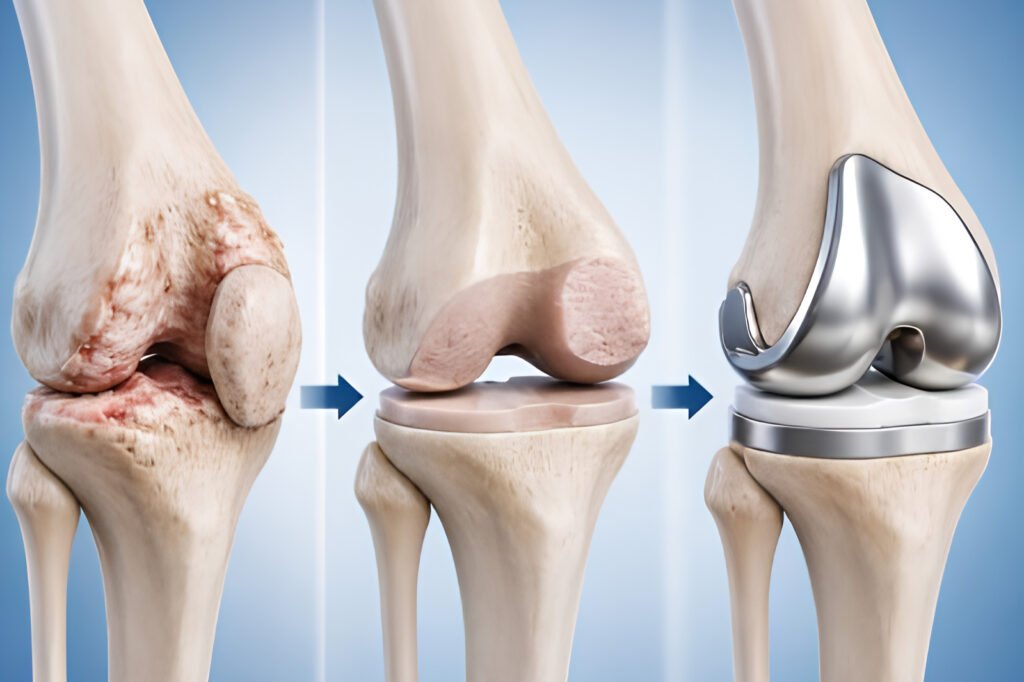

Knee Replacement Surgery in Vadodara

Understanding Knee Replacement Surgery

When knee pain begins to limit walking, climbing stairs, or everyday activities, even simple movements can become difficult. Knee replacement surgery may be considered when joint damage is advanced and non-surgical treatments no longer provide sufficient relief. The knee is essential for walking, standing, sitting, and maintaining balance. Over time, conditions such as osteoarthritis can wear down the cartilage that allows the joint surfaces to move smoothly. As the damage progresses, pain and stiffness may begin to interfere with daily life.

Knee Replacement Surgery in Vadodara is an option for people with advanced knee joint damage who have not achieved adequate relief through appropriate non-surgical treatment. The decision depends on the extent of joint damage, the effect on mobility, general health, and the expected benefits and risks of surgery. Dr. Shailin Shah provides orthopaedic evaluation and surgical care for knee conditions, with attention to joint function, treatment options, and the recovery process.

Expert Orthopedic Care by Dr. Shailin Shah

FELLOWSHIP IN ARTHROPLASTY (JOINT REPLACEMENT) AND ARTHROSCOPY (KEY HOLE SURGERY)
REVIEWED ON
4.9 RATINGS
REVIEWED ON
4.9 RATINGS

Signs that a surgical assessment may be appropriate:

Knee replacement is generally considered when persistent joint pain and stiffness begin to restrict normal activities, and treatments such as physiotherapy, appropriate medication, activity modification, or other non-surgical measures have not helped enough.

The decision is not based on age or an X-ray alone. An orthopaedic assessment considers how the knee feels, how well it moves, the degree of joint damage, and how much the condition affects everyday independence.

Persistent Knee Pain

Pain continues during walking, standing, or resting despite appropriate treatment and begins to interfere with everyday activities.

Restricted Joint Movement

Stiffness and reduced flexibility make it difficult to bend or straighten the knee, climb stairs, or rise from a chair.

Reduced Daily Mobility

Walking distances become shorter, routine tasks feel increasingly difficult, and knee discomfort begins to limit independence.

What the Procedure Involves

1

SURGICAL PLANNING

Reviewing scans, joint alignment & medical history.

2

JOINT PREPARATION

Removing damaged cartilage and affected bone surfaces.

3

IMPLANT PLACEMENT

Positioning artificial components to restore function.

4

MOVEMENT ASSESSMENT

Checking knee stability, alignment & range of motion.

Choosing the Right Type of Replacement

Not every damaged knee requires replacement of the entire joint. The appropriate procedure depends on where the cartilage damage is located, whether the remaining compartments are healthy, and how well the supporting ligaments function. Your surgeon will explain which approach is suitable after examining the knee and reviewing imaging findings. Neither option is appropriate for every patient, and the expected benefits and limitations should be discussed before surgery.

Partial Knee Replacement

When damage is limited to one compartment of the knee, a partial replacement may be an option for suitable patients. It preserves more of the natural joint, but the remaining compartments may develop arthritis over time.

Total Knee Replacement

When damage affects multiple compartments or is too extensive for a partial replacement, total knee replacement may be recommended. It involves replacing the damaged surfaces across the main compartments of the knee.

Dr. Shailin Shah
M.S.(ORTHO), DNB (ORTHO), FIJR, FIASM, MNAMS, DIPLOMA IN FIFA

Your Go To Orthopedic Surgeon in Vadodara

Dr. Shailin Shah is an orthopaedic surgeon practising at Rutvij Hospital, Vadodara. His clinical interests include knee conditions, sports-related injuries, arthroscopy, and joint replacement procedures.

His approach to knee care begins with evaluating the extent of joint damage and understanding how it affects movement. When knee replacement is being considered, the discussion should cover the available treatment options, suitability for surgery, implant considerations, and the rehabilitation needed afterwards.

For those exploring Knee Replacement Surgery in Vadodara, a consultation with Dr. Shailin Shah can help clarify whether joint replacement is appropriate or whether other treatment options remain worth considering.

Happy Patients

0 +
What to Expect During Recovery

Recovery After Knee Replacement Surgery in Vadodara

Recovery after knee replacement surgery is a gradual process focused on restoring movement, improving muscle strength, and helping you return to everyday activities. Early mobilisation and guided physiotherapy help improve knee flexibility and walking ability while reducing the risk of postoperative complications. The pace of recovery varies depending on your general health, mobility before surgery, and response to rehabilitation.

In the initial weeks, the focus is on managing discomfort, walking safely, and performing prescribed exercises. As strength and stability improve, you can gradually resume routine activities under medical guidance. Regular follow-ups help monitor healing and progress, while continuing rehabilitation supports long-term joint function and mobility. Following your surgeon’s advice and maintaining realistic expectations are important throughout recovery.

Frequently Asked Questions

It may be considered when advanced joint damage causes persistent pain and restricts daily activities despite appropriate non-surgical treatment. The decision follows an orthopaedic assessment.

No. Many people manage arthritis with exercise, physiotherapy, activity changes, weight management when appropriate, and medication. Surgery is considered when these measures do not provide sufficient relief and joint damage is significant.

Partial replacement treats damage limited to one compartment of the knee, while total replacement addresses more extensive joint damage. The choice depends on the location and severity of damage, ligament function, and other clinical findings.

Many patients make noticeable progress over first several weeks, while strength, swelling, & overall function may continue to improve for several months. Rehabilitation plays an important role.

Many people experience improved walking ability after recovery, but results depend on factors such as muscle strength, joint condition, general health, and adherence to rehabilitation. Normal movement cannot be guaranteed for every patient.

Consider the surgeon’s orthopaedic qualifications, relevant surgical experience, approach to evaluating your condition, explanation of risks and alternatives, and the rehabilitation support available after surgery. A consultation helps you make an informed decision.

Looking for Knee Replacement Surgery?

Consult Dr. Shailin Shah at Rutvij Hospital, Vadodara, to discuss your knee condition, whether replacement surgery may be appropriate, and what to expect from treatment and rehabilitation.

Scroll to Top