

Arthroscopy Surgery in Vadodara
Understanding Arthroscopy Surgery and Its Role in Joint Care
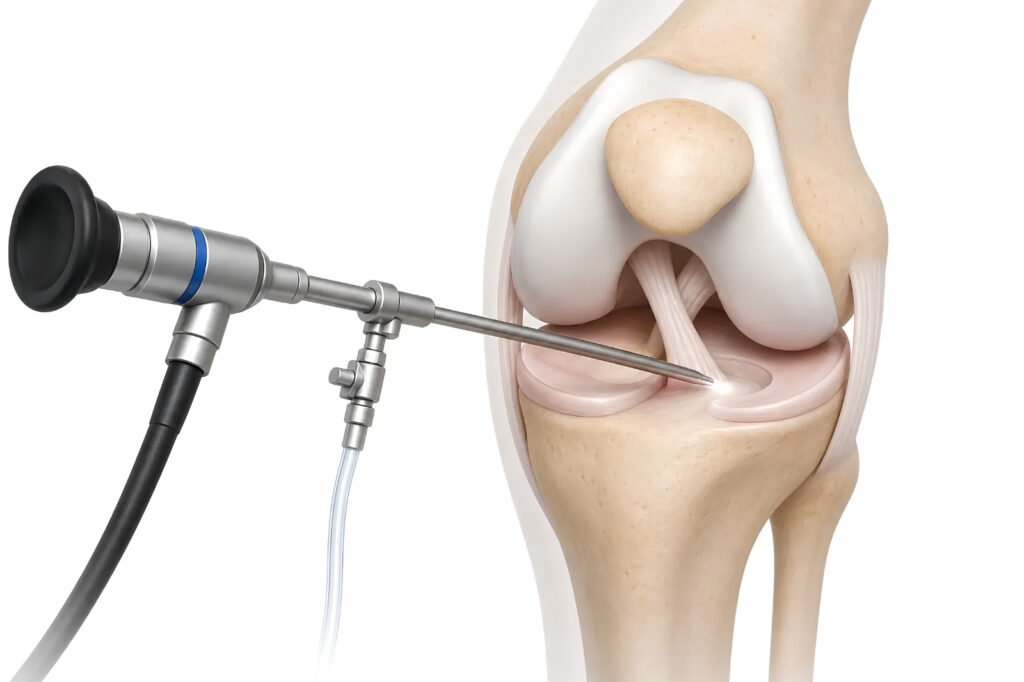
Arthroscopy is a minimally invasive surgical technique used to examine and treat certain problems inside a joint. It involves inserting a small camera, called an arthroscope, through a small incision so the orthopaedic specialist can view the joint on a screen. Specialised instruments may be used through additional small incisions to address the identified problem.
Arthroscopy surgery in Vadodara may be considered for selected joint conditions involving the knee, shoulder, ankle, elbow, or other joints. Dr. Shailin Shah evaluates the affected joint, symptoms, imaging findings, and functional limitations to determine whether arthroscopy is appropriate or whether non-surgical treatment may be more suitable.
Expert Orthopedic Care by Dr. Shailin Shah
When Joint Problems May Require Arthroscopic Assessment
Persistent joint pain, restricted movement, or instability can sometimes indicate an internal joint problem that needs further evaluation. However, these symptoms do not automatically mean surgery is necessary.
An orthopaedic assessment helps identify the underlying cause and establish whether medication, physiotherapy, activity modification, or an arthroscopic procedure may be appropriate.

Persistent Pain Despite Treatment
Joint pain that continues despite appropriate rest, rehabilitation, or other conservative measures may require further investigation to identify the cause and guide the next steps.

Catching, Locking, or Restricted Movement
Some joint conditions can cause catching sensations, mechanical locking, or difficulty moving the joint through its normal range. These symptoms may warrant clinical assessment and suitable imaging.

Recurrent Instability or Joint Dysfunction
Repeated giving-way episodes, instability, or difficulty performing routine activities may indicate an injury involving structures such as ligaments or other tissues within or around a joint.
How Arthroscopy Surgery Is Planned
1
ASSESSMENT
Reviewing symptoms, movement, stability, medical history, & previous treatment
2
IMAGING & DIAGNOSIS
X-rays or MRI scans may be recommended when needed to assess the joint
3
PLANNING
Discussing surgical approach, anaesthesia, & alternative treatments
4
ARTHROSCOPY
Through small incisions, a camera & specialised instruments are used
Types of Arthroscopic Procedures and Treatment Options
The type of arthroscopy depends on which joint is affected and the nature of the problem. The aim is to address the diagnosed condition while preserving healthy joint structures wherever possible.

Knee Arthroscopy
Knee arthroscopy may be used for meniscus tears, loose fragments within the joint, and certain ligament-related or cartilage problems. The specific procedure depends on the injury and whether repair or another treatment is appropriate.

Shoulder Arthroscopy
Shoulder arthroscopy may be considered for conditions involving the rotator cuff, labrum, or joint instability. The procedure is selected according to the affected structures and the person's symptoms and functional needs.

Ankle and Elbow Arthroscopy
In selected cases, arthroscopy of the ankle or elbow can help assess and treat problems such as loose bodies, certain cartilage injuries, or persistent joint symptoms caused by identifiable internal abnormalities.

Non-Surgical Joint Management
Not every joint problem requires arthroscopy. Physiotherapy, activity modification, medication, & other measures may be recommended depending on the diagnosis, severity of symptoms, and response to previous treatment.

Arthroscopy Care with Dr. Shailin Shah
Dr. Shailin Shah provides orthopaedic consultation at Rutvij Hospital, Vadodara, for patients experiencing joint pain, restricted movement, instability, or symptoms associated with joint injuries.
The assessment considers the location of symptoms, physical examination findings, relevant imaging, and the impact of the condition on daily activities. These details help determine whether arthroscopy is appropriate and which treatment options should be considered.
During consultation, patients can discuss the purpose of the proposed procedure, its potential benefits and limitations, possible complications, and the rehabilitation that may follow. The treatment plan depends on the specific joint condition and individual clinical findings.
Happy Patients
Recovery After Arthroscopy Surgery in Vadodara
Recovery after arthroscopy depends on the joint treated and the type of procedure performed. Some patients can begin gentle movement soon after surgery, while others may need temporary support, activity restrictions, or a more gradual rehabilitation programme. The treating specialist provides instructions regarding wound care, pain management, and the safe progression of movement.
Physiotherapy may be recommended to restore joint mobility, strength, balance, and function. Returning to work, driving, sports, or strenuous activity should be guided by the procedure performed and progress during rehabilitation rather than by a fixed timeline alone.
Frequently Asked Questions
Is arthroscopy always better than open surgery?
Not in every situation. Arthroscopy can be suitable for certain joint conditions, but some injuries or complex problems may require open surgery or another approach. The decision depends on the diagnosis, anatomy, and treatment goals.
Can arthroscopy help diagnose a joint problem?
Arthroscopy allows the specialist to directly view structures inside a joint. However, it is an invasive procedure, so it is generally considered when clinical assessment and imaging have not provided enough information or when treatment can also be performed during the procedure.
What anaesthesia is used for arthroscopy?
The type of anaesthesia depends on the joint being treated, the planned procedure, and the patient’s medical history. Options may include general, regional, or local anaesthesia in selected circumstances, as determined by the surgical and anaesthesia teams.
Are there risks associated with arthroscopy?
Possible risks include infection, bleeding, blood clots, stiffness, persistent symptoms, and complications related to anaesthesia. The likelihood and nature of complications vary depending on the procedure and individual health factors.
Will I need physiotherapy after arthroscopy?
Physiotherapy is commonly recommended after many arthroscopic procedures, particularly when strength, movement, or joint stability needs to be restored. The rehabilitation plan depends on the procedure and whether any tissues require protection while healing.
When can I return to sports after arthroscopy?
The timing varies according to the joint, the injury treated, and the rehabilitation progress. Return to sport should generally depend on adequate strength, range of motion, stability, and functional testing rather than the number of weeks since surgery alone.

Looking for Arthroscopy Surgery in Vadodara?
Consult Dr. Shailin Shah at Rutvij Hospital, Vadodara, to discuss your joint symptoms, understand whether arthroscopy is suitable for your condition, and explore the treatment and rehabilitation options available.