
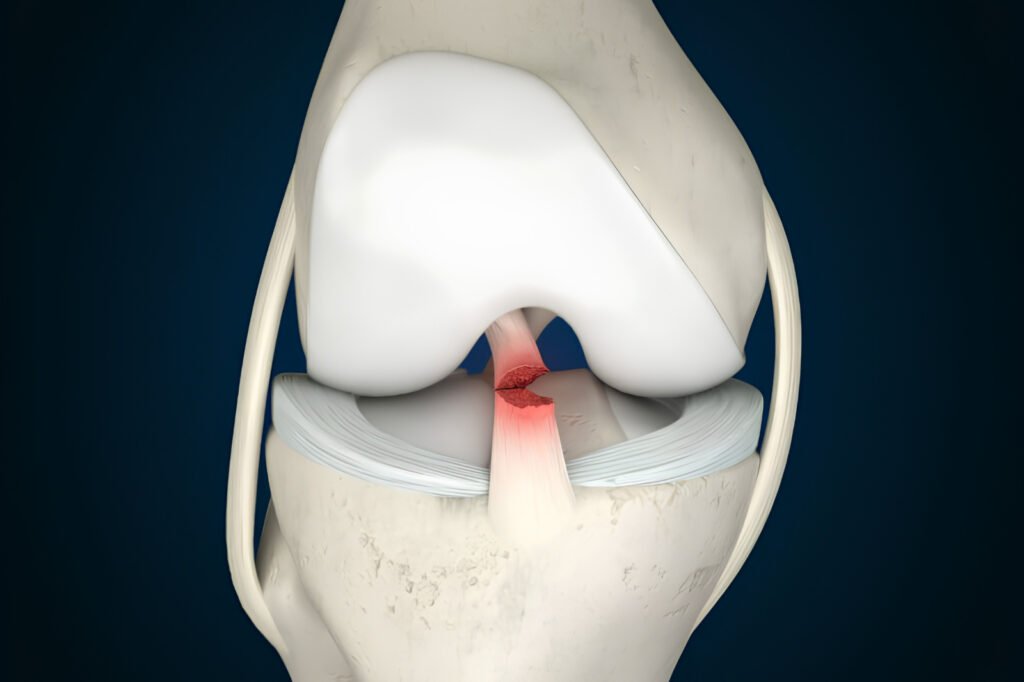

ACL Tear Treatment in Vadodara

Understanding ACL Tears and Knee Stability

A sudden change in direction, an awkward landing, or a twisting movement during sports can injure the anterior cruciate ligament (ACL), one of the key structures that helps stabilise the knee. An ACL tear may cause pain, swelling, and a feeling that the knee is giving way, making activities such as running, jumping, and turning difficult. The severity of the injury and its effect on knee stability can vary from one person to another.

ACL Tear Treatment in Vadodara depends on the extent of the ligament injury, knee stability, activity requirements, and whether other structures, such as the meniscus, are also damaged. Some injuries can be managed with rehabilitation and activity modification, while others may require ACL reconstruction. Dr. Shailin Shah provides orthopaedic evaluation for knee and sports-related injuries, helping determine suitable treatment options based on clinical findings and functional needs.

Expert Orthopedic Care by Dr. Shailin Shah

FELLOWSHIP IN ARTHROPLASTY (JOINT REPLACEMENT) AND ARTHROSCOPY (KEY HOLE SURGERY)
REVIEWED ON
4.9 RATINGS
REVIEWED ON
4.9 RATINGS

When an ACL Injury Needs Further Assessment

An ACL injury should be assessed when knee pain, swelling, or instability affects walking, sports, or everyday movement. Early evaluation can help identify the extent of the injury and whether other parts of the knee have also been affected.

The need for surgery is not determined by the MRI report alone. An orthopaedic assessment considers knee stability, activity goals, associated injuries, and the response to rehabilitation before recommending an appropriate treatment plan.

Knee Instability

The knee feels unreliable or gives way during turning, walking on uneven ground, or changing direction.

Swelling After Injury

The knee becomes swollen following a twisting movement, sudden stop, awkward landing, or other sports-related incident.

Difficulty Returning to Activity

Running, jumping, pivoting, or participating in sports remains difficult because of instability or reduced knee function.


What ACL Reconstruction Involves

1

SURGICAL PLANNING

Assessing knee stability, MRI findings & associated injuries.

2

GRAFT PREPARATION

Preparing a suitable graft to replace the torn ligament.

3

RECONSTRUCTION

Positioning the graft to restore knee stability.

4

MOVEMENT ASSESSMENT

Checking knee stability, movement & graft positioning.

Choosing the Right ACL Tear Treatment

Not every ACL tear requires surgery. Treatment depends on the degree of knee instability, associated meniscus or ligament injuries, activity requirements, and the goals of the individual. Rehabilitation may be appropriate for selected injuries, while ACL reconstruction may be recommended when instability persists or the knee needs to support activities involving repeated pivoting and sudden changes in direction.

Non-Surgical ACL Treatment

A rehabilitation programme focuses on reducing swelling, restoring knee movement, strengthening the surrounding muscles, and improving balance. It may be suitable for selected patients whose knees remain functionally stable and whose activity requirements can be met without reconstruction.

ACL Reconstruction Surgery

ACL reconstruction replaces the torn ligament with a graft, usually taken from a tendon in the patient's own body or, in selected cases, from donor tissue. It may be considered when knee instability affects daily activities or a return to sports involving pivoting and rapid directional changes.

Dr. Shailin Shah
M.S.(ORTHO), DNB (ORTHO), FIJR, FIASM, MNAMS, DIPLOMA IN FIFA

ACL Injury Care with Dr. Shailin Shah

Dr. Shailin Shah is an orthopaedic surgeon practising at Rutvij Hospital, Vadodara. His clinical interests include sports-related injuries, arthroscopy, knee conditions, and joint replacement procedures.

An ACL injury requires assessment of the entire knee, not just the torn ligament. Evaluating stability, associated cartilage or meniscus injuries, activity demands, and rehabilitation potential helps guide the choice between non-surgical management and reconstruction.

For those seeking ACL Tear Treatment in Vadodara, a consultation with Dr. Shailin Shah can help clarify the extent of the injury, suitable treatment options, and the steps involved in returning to everyday activities or sport.

Happy Patients

0 +
What to Expect During Recovery

Recovery After ACL Tear Treatment in Vadodara

Recovery after an ACL injury depends on whether treatment involves rehabilitation alone or surgical reconstruction. Early management focuses on controlling swelling, restoring knee movement, and rebuilding muscle strength. When surgery is performed, rehabilitation progresses in stages to protect the graft while improving flexibility, balance, and knee control.

Returning to sports requires more than the absence of pain. Strength, stability, balance, movement quality, and the ability to perform sport-specific activities must be assessed before clearance. Recovery timelines vary according to associated injuries, the type of treatment, and individual progress. Following the rehabilitation programme and attending scheduled reviews are important for a safe and gradual return to activity.

Frequently Asked Questions

A torn ACL generally does not heal back together like some other tissues, but selected patients can regain good knee function through structured rehabilitation. Whether surgery is needed depends on instability, associated injuries, and activity requirements.

An orthopaedic examination helps assess knee stability and identify signs of ligament injury. MRI is often used to confirm the diagnosis and evaluate associated damage to structures such as the meniscus and other ligaments.

The ACL and medial collateral ligament (MCL) are different structures that help stabilise the knee. The ACL primarily controls forward movement and rotation of the shin bone, while the MCL helps resist inward bending of the knee.

Yes. An ACL tear can result from falls, sudden changes in direction, awkward landings, or other movements that place excessive stress on the knee. Sports are a common cause, but they are not the only cause.

Grafts may be taken from the patient’s patellar tendon, hamstring tendons, or quadriceps tendon. Donor tissue may be considered in selected cases. Graft selection depends on clinical factors, activity needs, and the surgeon’s assessment.

Return to sports often takes several months and may require nine to twelve months or longer, depending on the individual. Clearance should be based on strength, stability, functional testing, and sport-specific readiness rather than time alone.

Looking for ACL Tear Treatment?

Consult Dr. Shailin Shah at Rutvij Hospital, Vadodara, to discuss your knee injury, whether rehabilitation or ACL reconstruction may be appropriate, and the steps involved in restoring knee stability.

Scroll to Top